Field craft · gear
The survival bracelet, honestly
Few objects carry as much mythology per gram as the survival bracelet. Strip away the marketing and the case is simple and solid: a woven band of Type III 550 cord puts three to five metres of strong, versatile cordage on your body, wherever you are, whatever you forgot to pack. That is a genuinely useful thing. It is not a survival kit, and this page is about telling the difference.
The arithmetic
A standard cobra bracelet carries roughly 1.2 m of cord per 2.5 cm of woven length — so an 18 cm wrist wears about 3.5–4 m of cord. A fishtail carries about half that but deploys faster; a king cobra or a belt multiplies the figure. Gutted, that bracelet also yields 7 strands per metre of sewing thread, snare wire wrap, fishing line and lashing. For the full deployment list, see paracord uses in the field.
Deployments that actually work
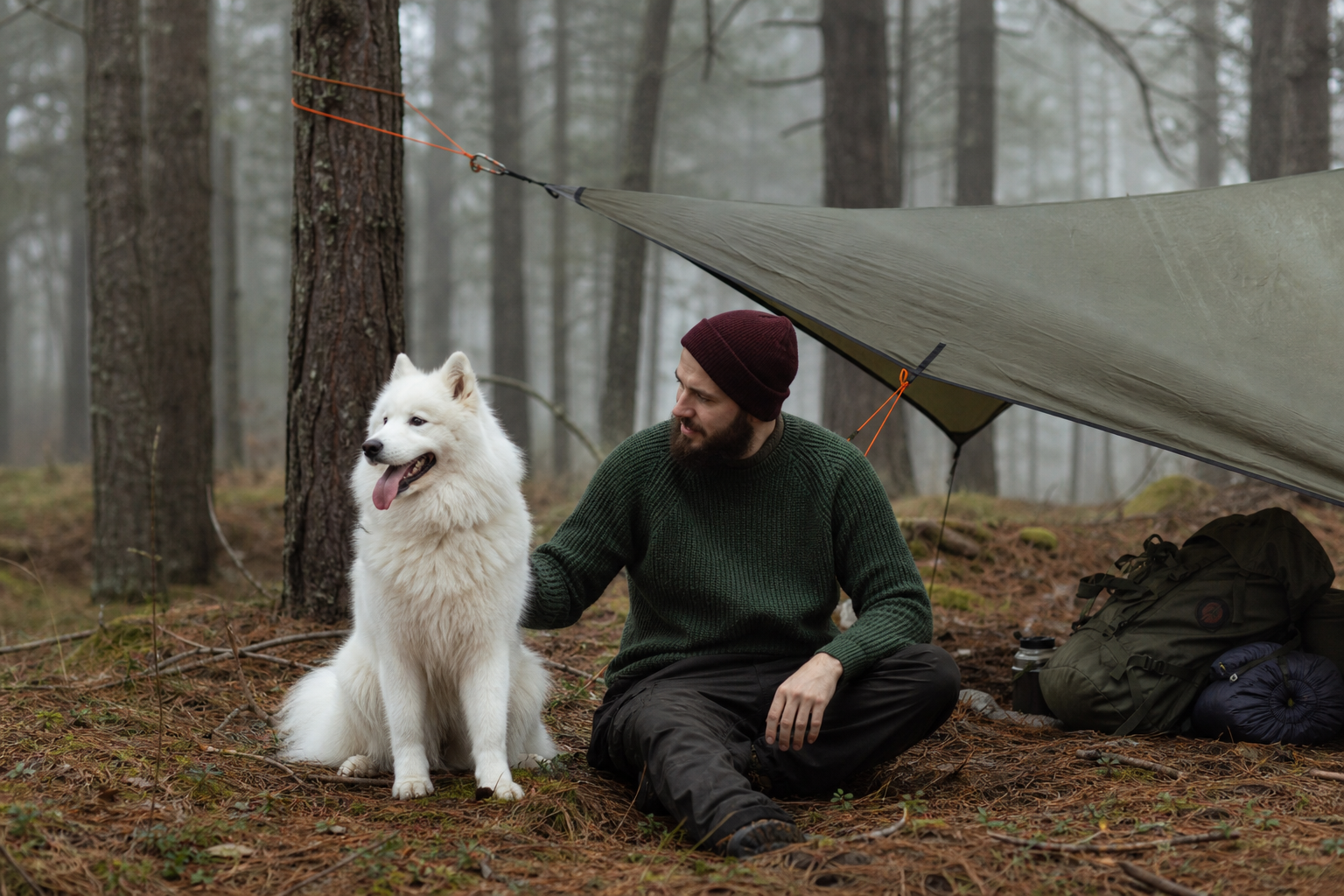
- Tarp ridgeline and guy runs — the single best use. Four metres plus two prusik loops from your bootlaces is a shelter.
- Bootlace and strap repair — the boring, brilliant one. A broken lace miles from anywhere ends the trip; cord fixes it in two minutes.
- Bundle, hang, lash — splints, gear hoists, repairs to packs and tent poles.
- Gutted-strand improvisation — fishing line, sewing repairs, dental-floss-adjacent emergencies.
The mythology, audited
- "Break down the inner strands for fishing and snares." True, with a catch: unravelling, separating and re-plying seven strands by headlamp, with cold fingers, takes longer than the internet suggests. Practise once at home.
- "Tourniquet!" A 3 mm cord as a tourniquet strap is a last-ditch improvisation, not a plan — see the honesty note in our first-aid section. Carry a real one if you carry one at all.
- "550 lb rating." Lab number, new cord, no knots. Real-world planning uses a fraction of it; knots, age and UV take the rest. Details in the sizes guide.
- "The buckle with a hidden compass, flint and whistle." Each gimmick subtracts buckle strength. A plain strong closure and a lanyard-knotted whistle fob beats the Swiss-army buckle.
Choosing one well
Weave: deployment-first buyers should look at fishtail or a simple cobra; jewellery-first at king cobra. Closure: a shackle you can open with numb fingers, or a quality side-release — the comparison lives in our buckle guide. Cord: honest nylon 550 from the buyer's guide checklist, in a colour you can find in leaf litter. Fit: snug enough not to snag, loose enough to fit over a gloved hand or swollen wrist.
The one--minute test: before you trust a bracelet, time yourself unravelling it. Pick the final knot free, pull, and let the weave fall open. Under a minute: it is cordage. Over five: it is a bracelet that used to be cordage. Re-weave the tail with less melt, or switch to a fishtail.
The honest verdict
A survival bracelet is not magic and not nonsense — it is worn redundancy: a few metres of excellent cord and a few metres of thread that happen to look good on a wrist. The people who get the most from one treat it as gear: they measure the cord, test the deployment, and re-weave the bracelet after each use. The people who get the least buy three at a truck stop. Our cobra tutorial and fishtail guide exist so you can be in the first group this weekend.
And if you already carry cord three other ways — in the pack, on the belt, in the lanyard — wear the bracelet you enjoy looking at. The best survival bracelet is, without embarrassment, the one you actually wear: the four metres of cord on the wrist you forgot to count will always beat the fifty metres in the drawer at home.